Sony Ericsson / Sony : Symbian phones : W960 - low volume levels and poor sound on Walkman player
>
New Topic
>
Reply<
Esato Forum Index
>
Sony Ericsson / Sony >
Symbian phones
> W960 - low volume levels and poor sound on Walkman player
Bookmark topic
The good news is that future UIQ walkman handsets should address this problem. If the rumors that BeiBei will use an OMAP 3 series chipset then that alone has a DSP which will dramatically increase the audio quality. About time too.
--
Posted: 2008-01-30 10:30:52
Edit :
Quote
Please make me believe that w960i sound quality is poor. I dont believe since I think you do not know the difference between sound quality and volume level which is a common mistake. If you show me any RMAA data of w960i which is bad so I can believe you. If not your proof only depend on your ears which is not reliable.
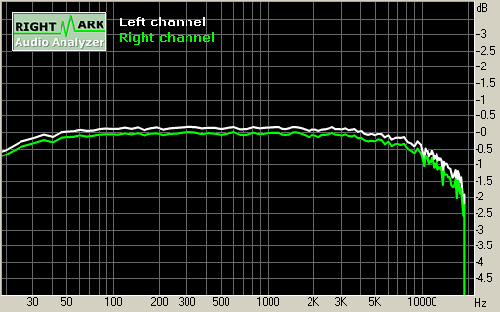
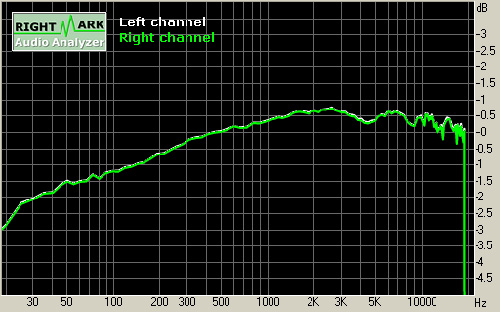
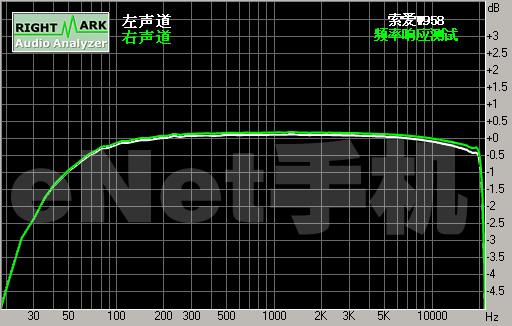
Here is a chart of RMAA data. One of them belong to W958c which is chinese version of w950i. Many people in this forum says that hardware of w950i is identical to w960i except 8gb flash and etc.
http://www.gsmarena.com/latest_features-review-171p2.php
Taken from GSMArena:
"The frequency response curves seen on our RMAA generated graphs are often used to indicate the accuracy of amplifiers and speakers in reproducing audio. Good frequency response does not guarantee a specific fidelity, but only indicates that a piece of equipment meets the basic frequency response requirements. As an example, a high fidelity amplifier may be said to have a frequency response of 20 Hz - 20,000 Hz ±1 dB. This means that the system amplifies all bands from 20 Hz to 20,000 Hz with a maximum positive or negative deviation from the straight line of only 1 dB. Larger deviations below 40 Hz or above 15 kHz are OK, since the human ear is unable to perceive those sounds.
The noise levels are the next important aspect of sound reproduction. As seen in our tests, noise is usually measured in relation to the signal levels, otherwise known as the signal-to-noise ratio. In less technical terms the signal-to-noise ratio compares the level of a desired signal (such as music) to the level of background noise ('background' meaning unwanted interferences created by the equipment). So the higher the signal-to-noise ratio, the less obtrusive the background noise, hence the reproducing equipment is of a higher quality.
The dynamic range is another important factor. The human sense of hearing has a very high dynamic range. A person is capable of hearing anything from a quiet murmur in a soundproofed room to the sound of the loudest rock concert. A difference like this can be up to 100dB. A person however cannot perform these feats of perception at both extremes of the scale simultaneously - you cannot hear a whisper in a noisy street for example. Nevertheless, a good quality audio reproduction system should be able to reproduce accurately both the quiet sounds and the loud at the same time. Audio engineers often use the term dynamic range to describe the ratio of the loudest possible undistorted sound to the quietest or to the noise level, say of a microphone or loudspeaker. This dynamic range of an audio device is also sometimes referred to as the dynamic window. To mathematically determine a dynamic range you must take the difference between the ceiling and the noise floor of an audio device. For example, if the ceiling of a device is 10 dB and the floor is 3 dB then the dynamic range is 7 dB, since 10 - 3 = 7. So the larger the dynamic range (or otherwise the dynamic window), the better the device performs at reproducing quiet and loud sounds simultaneously.
The total harmonic distortion (THD) and the intermodulation distortion (IMD) might be the next items you will notice on our measurement results. By the name you know they are a measure of the unwanted altering of the original signals. Distortion is the name given to anything that alters a pure input signal in any way other than changing its magnitude. So, as you might have guessed it, the lower the number, the better the sound reproduction.
The stereo crosstalk is another thing of importance that we measure in our tests. Crosstalk measurement is made to determine the amount of signal leaking across from one channel to another or in purely non-technical terms it measures how good the stereo is. So, the higher the absolute value, the better the stereo."
There are some Turkish words in graph sorry.

Links:
http://www.gsmarena.com/nokia_n81_8gb-review-180p5.php#
http://www.mobile-review.com/review/nokia-n81-en.shtml
http://forum2.mobile-review.com/showthread.php?p=644296
http://www.mobile-review.com/review/nokia-n95-8gb-en.shtml
http://tech.sina.com.cn/mobile/n/2007-01-22/10411346648.shtml
N81
 N95-8GB
 W950
W950
 IPod Touch

Graphs show that in overall N91 > w950~N81 > N95-8GB . If W950i and W960i hardware on music is same so W960i has a good sound quality.
[ This Message was edited by: ozzturkgem on 2008-01-30 10:38 ]
--
Posted: 2008-01-30 11:24:02
Edit :
Quote
The GSM arena review of the W960 could publish RMA tests sadly so we dont know for sure.
--
Posted: 2008-01-30 14:26:36
Edit :
Quote
nice
--
Posted: 2008-01-30 18:54:04
Edit :
Quote
Not sure about you guys but P1i, when I used with HPM 82, got very loud volume. Even if I put the volume to the minimum before it is silent, it is still loud. If only softer! Hah.
--
Posted: 2008-01-30 22:54:08
Edit :
Quote
Problem with these freqeuncy response curves is that we don't know what EQ setting the phone was set too during the tests? if they where all set to flat or normal then these would be like for like across the phones.
--
Posted: 2008-01-31 09:47:54
Edit :
Quote
Yeah true. For the W960 they couldnt do a RMA test as the unit they had was already preset with some settings. Might have been the same for the W950 that was tested.
--
Posted: 2008-01-31 10:44:08
Edit :
Quote
Main dissapointment is Sony Ericsson didn't address the low volume issues of the w950 when they released the w960. Ive just gone from a w910 to the w960 and it just isnt quite loud enough to drown out background noise tv's etc in the gym like the w910 used to. I used HBM 82 which i kept from my w950 on both handests.
What with the appauling bulid quality/reception and slow media player issues of the w910 and now the same unresolved issues carried over from the w950 on the w960 im finding myself using my n95 8gb more and more for everything.
Im a huge SE fan but after the constant cracked keys of my w580 as well im starting to think twice on purchasing SE products in future. Its a shame because I love the UI on their non symbian SE handsets.
--
Posted: 2008-01-31 11:49:00
Edit :
Quote
On 2008-01-31 09:47:54, leeboy22001 wrote:
Problem with these freqeuncy response curves is that we don't know what EQ setting the phone was set too during the tests? if they where all set to flat or normal then these would be like for like across the phones.
Most probably with preset EQ. But, trusting somebedy elses ears that is even worse. I do not trust your ears, I can only trust RMAA tests.
How do you now a Nokia Phone such as N81 do not have a preset EQ which is different than the EQ you can reach from Music apllication interface.
N81 and N76 almost same hardware but the sound quality is different how can you explain superior sound quality of N81 without a preset EQ or a similar thing. So do not blame SE for preset EQ, you cannot be sure which phone have them.
--
Posted: 2008-01-31 17:18:28
Edit :
Quote
I use the HBH-DS220 with my p1i, which has excellent sound and adds the 3.5mm plug option so you can use it with any headset. Standard SE headsets are tampered to 20db.
--
Posted: 2008-02-01 23:08:44
Edit :
Quote
New Topic
Reply
