>
New Topic
>
Topic Locked
Esato Forum Index
>
General discussions >
Rumours
> SONY XPERIA Rumors 2014
Bookmark topic
supercoolman Posts: > 500
this is a thread on rumours. not only for the mobile phones, but lso the tech on the mobile phone. next thing we need are the pcb design, layout and schematics

--
Posted: 2014-02-28 04:24:14
Edit :
Quote
Yeah, but the text input just seems so tedious.
--
Posted: 2014-02-28 04:26:38
Edit :
Quote
On 2014-02-27 23:30:32, Smaug wrote:
@Wintermute
Thanks for the informative post. There are a couple of questions remaining though.
Triluminos in BRAVIA splits the blue LED light and re-emits at red or green wavelengths using QD Vision's tech. Where things get murky is the Tablet Z2's Live Colour LEDs do not emit blue. Due to the double phosphor coating, the LED emittance is blue, red and green. This light then passes through the nanocrystal layer in order to energise the QDs into specific wavelengths.
Perhaps I am missing something in the process, but conventional Triluminos would not work under this method. You would need to modify the QD layer to absorb different wavelengths representing RGB, which would then... re-emit RGB again? If we use your bell curve analogy, sure you can get very narrow wavelengths (so very specific colours) but the phosphor tech is meant to incorporate this anyway. It is the missing piece of this display puzzle.
Note not being able to turn off the feature does not necessarily confirm it is not software based. You cannot turn off the BIONZ image processor, for example.
That's why I am perplexed as to why Sony would incorporate both hardware Triluminos and Live Colour LEDs. They do the same job but add development, manufacturing and licence costs and complexity. Admittedly, Sony haven't stated whether they licence the phosphor tech from a third party, but there are a few out there that specialise in it as this isn't new. Sony just claim they're the first to apply it in a tablet. In their promotions, Sony also distinguishes between Live Colour and Triluminos so they must be separate processes.
I read a research paper (thrilling, I tell you) discussing phosphor LEDs. In short, they produce a wide CRI value but at a cost: lower power efficiency due to the Stokes shift. By combining multiple phosphors, the luminous emittance can appear "brighter" due to the human eye's varying sensitivity to different wavelengths. In short, Sony's new displays should appear brighter, more vivid and with a broad colour gamut, but will drain more power and the screen will be hot.
Perhaps the Tablet Z2 and XZ2's displays are more advanced than we think. If Sony modified the Triluminos QD layer to absorb and re-emit the RGB from the coated LEDs, you'd get highly accurate colour rendering, 100% of NTSC gamut and bright screen. If they solved the power trade-off (note bigger battery in XZ2), even better.
Apologies for those that feel we've highjacked the Rumours thread. However, this has strong implications for future Xperia models. If true, combined with IPS panels and Sony may have unquestionably the best displays on the market. Resources could then be diverted towards improving camera software or speakers etc.
Hmm...well, I'll see if I can do some digging and come up with something about the new displays, but I have no doubt that the previous generation of Triluminos used quantum dots and that Triluminos is thus a hardware feature. I read everything I could get my hands on about Triluminos for mobile when the Z Ultra came out, and everything confirmed they are using QD Vision's technique involving quantum dots.
Like I said, I'm going to look for information on Live Colour, but I'm confident in saying that if they're using phosphor, they're not using quantum dots. Which is not to say they didn't use it before, but like you said, it wouldn't make sense. The whole appeal behind quantum dots is that they absorb light and re-emit it at a precise wavelength. It doesn't matter what color the light it absorbs is, though, so you'd get no benefit from, for instance, shining red light on a red quantum dot compared to shining blue or white light on it. The light it emits will be the same color.
--
Posted: 2014-02-28 05:42:04
Edit :
Quote
^What I'll be sure right now is that they won't use two hardware implementations that does the same thing. But I really doubt Triluminos is hardware, with only a bit wider gamut than standard white backlight and the fact that Live Colour was explained as a hardware and no direct explanation of any hardware implementation for Triluminos mobile.
Can anyone on neogaf ask zomg about this? I'm pretty sure he would know, or at least his sources.
--
Posted: 2014-02-28 07:37:30
Edit :
Quote
On 2014-02-28 01:51:46, ardian wrote:
On 2014-02-27 19:37:36, DexterMoser wrote:
On 2014-02-26 16:48:39, ardian wrote:
On 2014-02-26 13:19:20, DexterMoser wrote:
@Ardian:
Wasn't there something exceptional about the Z2 that you couldn't tell us before the announcement?
I'm just curious, what was it?
for that you have to have more time mate

... new flagship
I want it now, damn!

hahaha you cant have it now
.. Lebron waited like 8 years to get his first ring
you need to wait only 6 months
Ok, Z2 has to fulfill my needs until then

--
Posted: 2014-02-28 11:27:45
Edit :
Quote
On 2014-02-28 11:27:45, DexterMoser wrote:
Ok, Z2 has to fulfill my needs until then
Go for a 6-month contract because the next flagship will come out after 6 months and you will feel cheated by Sony and your phone will no longer become a priority.
--
Posted: 2014-02-28 11:39:44
Edit :
Quote
CrownedAkuma Posts: > 500
On 2014-02-28 11:39:44, itsjustJOH wrote:
On 2014-02-28 11:27:45, DexterMoser wrote:
Ok, Z2 has to fulfill my needs until then
Go for a 6-month contract because the next flagship will come out after 6 months and you will feel cheated by Sony and your phone will no longer become a priority.

--
Posted: 2014-02-28 11:42:02
Edit :
Quote
New "Smart LifeLog Camera Concept"
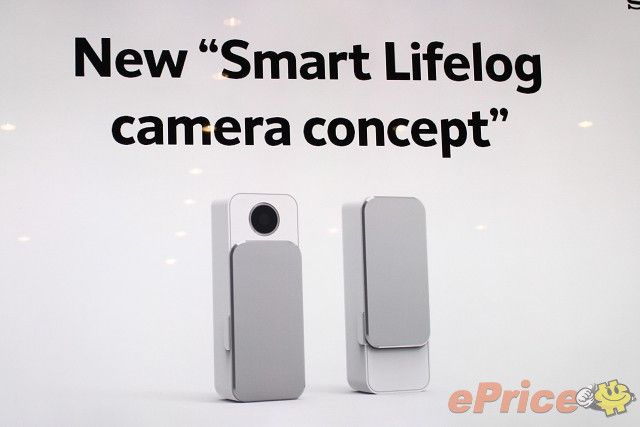
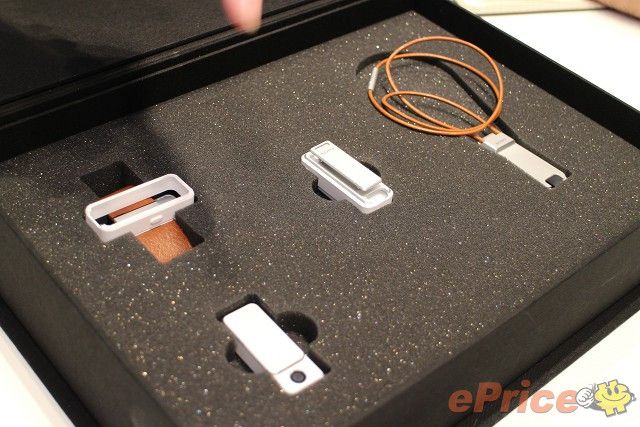
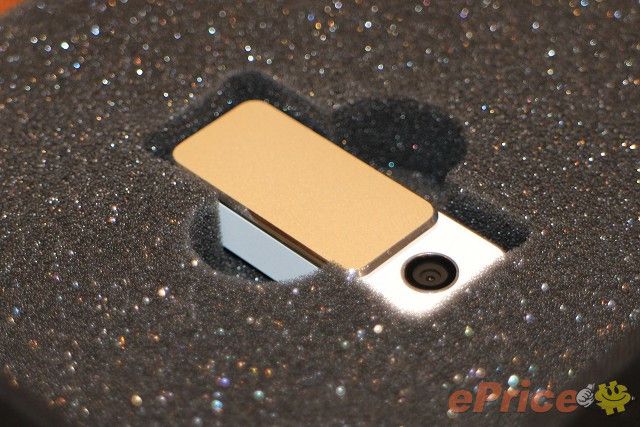
Source:
http://sonyviet.vn/2014/02/sm[....]h-dien-ban-thu-lifelog-camera/
--
Posted: 2014-02-28 11:53:25
Edit :
Quote
Erica made an initial gamut test for the Z2.


I'm impressed by the capabilities of this device so far.
Gamut is large, comparable to Super AMOLED displays.
On the Z2 devices demonstrated in Barcelona, there's no chroma saturation boost added. If color seem plenty intense they don't look too over-saturated like we've seen often on Samsung wide gamut panels.
Erica Griffin's G+ Page[ This Message was edited by: itsjustJOH on 2014-02-28 11:54 ]
--
Posted: 2014-02-28 12:52:49
Edit :
Quote
@Wintermute
If you find anything interesting, let us know. Sony aren't exactly forthcoming with info on the XZ2 and Tablet Z2's new Live Colour tech; perhaps due to licencing conditions. I've made logical deductions after piecing together info from a variety of sources, but I may be misinformed.
Live Colour on BRAVIA is definitely a software solution run by a dedicated chip; Sony stated as much. Conversely, Triluminos on BRAVIA is a hardware solution. Xperia may be a different story. We're also yet to see whether this remains exclusive to flagship models or whether it will be rolled out across the range. The cheaper Xperia M2 does not incorporate BIONZ or Triluminos so clearly there is a cost involved in implemention, regardless of software/hardware.
QD tech is relatively new; phosphors are not. Plasma TVs use electrically charged gas to emit photons that interact with a phosphor-coated cell plate. It's partially why (among other reasons) plasmas tend to run hot and use more power. If Sony's engineers have solved the tradeoffs associated with phosphor tech, rivals would be scrambling to catch up.
@spw
Yes, I'm aware of the figures in the article, having used it several times myself. However, numbers can be misleading. Just because sensors are a "$3 billion business" does not mean it is a cash cow for Sony. Allow me to elaborate:
Sony sensors sells for an average $7.30. However, if they cost (say) $7.50 to manufacture, Sony would lose money. By increasing production capacity, you can achieve better economies of scale and lower your per-unit costs. The real question is a matter of profit margins. Sony's financial reporting lumps together units, so extrapolating what the margins are for sensors is unclear. For example Samsung, the world's largest supplier of TVs, makes just 3% margin. LG makes virtually 0%. Every BRAVIA TV sells for a loss. VAIO too, in an industry estimated to be worth over $200 billion.
The definition of a cash cow (the term I used) differs, but generally it implies a product line or business unit that generates above-average returns on investment at a stable rate. Popularised by the BGC matrix, it can also be tied to the mature phase of the product development lifecycle. Since sensors must continually evolve and we have little idea of margins, Sony's sensor division cannot be correctly classified as a cash cow. It may be (marginally) profitable, but not a raft to keep Sony afloat.
What we can agree on is that Sony is investing heavily in their sensor (and camera) division. This forms 1 of 3 priority areas Kaz outlined, implying Sony intends to make imaging a core competency. It is also a missed opportunity for a company that has high brand value. The vast majority of people buying iPhones do not realise it contains a Sony sensor. They think it is Apple tech. Sony could focus more on branding their B2B components, just like Intel did with the highly successful "Intel Inside" campaign.
--
Posted: 2014-02-28 13:28:57
Edit :
Quote
New Topic
Topic Locked
