>
New Topic
>
Reply<
Esato Forum Index
>
General discussions >
General
> New concepts in mobile handset design
Bookmark topic
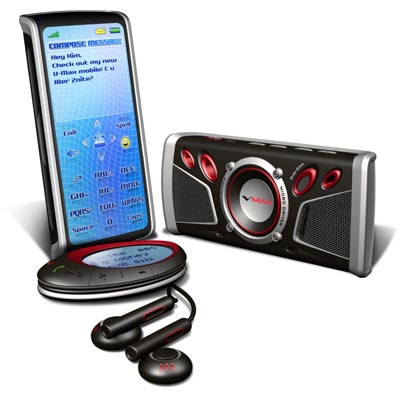
Alloy (www.thealloy.com), an industrial design consultancy with a leading track record in communications design and PMN (www.pmn.co.uk), the independent mobile market intelligence firm, have announced the results of an extensive research and product design collaboration at the World Handset Forum in San Diego.
_________________
WIDGX|
THE TRUTH REVEALED[ This Message was edited by: axxxr on 2006-05-24 00:04 ]
--
Posted: 2004-12-11 04:38:06
Edit :
Quote
wow looks good, more futuristic

--
Posted: 2004-12-11 04:46:02
Edit :
Quote
Wow, 95 % touch touch screen, hard to protect this kind of phone!
--
Posted: 2004-12-11 10:10:38
Edit :
Quote
Quote:
On 2004-12-11 10:10:38, cyberkid wrote:
Wow, 95 % touch touch screen, hard to protect this kind of phone!
Touch screen technology is getting better by the day,no doubt in the near future models touch screens will be completely 100% scratch proof...I know some mobile manufactures are already working on this technology including

--
Posted: 2004-12-11 15:46:22
Edit :
Quote
if i aint wrong s700 has a scratch proof screen
--
Posted: 2004-12-11 16:10:21
Edit :
Quote
Quote:
On 2004-12-11 16:10:21, Indiandawg wrote:
if i aint wrong s700 has a scratch proof screen
Yes absolutely the S700 does indeed!
--
Posted: 2004-12-11 16:12:57
Edit :
Quote
thats why sony ericsson rox guys

i m really looking fwd wht the companies have to say abt these...futuristic phones...espiceally sony ericsson
--
Posted: 2004-12-11 16:18:01
Edit :
Quote
Thanks for picking up this news item - I was responsible for this project at PMN, working in partnership with the product designers at Alloy.
To answer your question regarding the touch-screen on this concept design, the glass is actually covered by a protective plastic membrane, which is also used to give 'texture' to the soft-keys on the screen. This means you have the advantage of being able to change the interface behind the buttons (e.g. skinning with a different style or changing the arrangement of the buttons altogether) but still get the feeling of real hard keys.
It also incorporates a relatively new technology which provides tactile feedback by enabling the whole screen to 'click' downwards when pressed.
Alloy used this approach because the users the handset is designed for (15 - 18 year old kids, driven by shared interest in music) had some very demanding requests which require the handset to change its interface quite dramatically depending on which mode it is in. For instance, in texting or instant messaging mode, the buttons will show ABC alphabet characters, but in voice mode, these change back to numbers. In music mode, the buttons can dissappear altogether and the screen can morph into a graphic equalizer or music 'visualiser'.
Marek Pawlowski
PMN - Mobile Industry Intelligence
www.pmn.co.uk
--
Posted: 2004-12-13 02:44:02
Edit :
Quote
Thanks marekp!...I just like to say a very warm welcome to esato,and it is indeed an honour to have members such as yourself among us.
Its good to have people that are directly involved in these projects join our discussion forum,And give us inside and detailed information as you have on your concepts.I hope you keep us upto date with your companys ventures and projects....and hopefully one day the news on the final production of these amazing handsets.
Cheers!!

--
Posted: 2004-12-13 02:59:26
Edit :
Quote
Thanks for the warm welcome. Always happy to discuss these projects - PMN is very much commited to promoting a better mobile user experience and this collaboration with Alloy is a significant part of that process.
The designs are intended as concepts to provoke debate on this issue, but part of the brief was to ensure they used technologies readily available today and could be produced within the required cost parameters for each market segment (i.e. for the 15 - 18 year old kids, it had to be possible to manufacture it at relatively low cost).
There are no plans to pursue manufacturing of them in their current form, but after the interest we received at the World Handset Forum, I suspect you will see some of these innovations filtering into mainstream handsets over the next 18 - 24 months (the average time-to-market for new mobile handsets).
The real moral of this story, however, is that the major mobile handset manufacturers need to start focusing on understanding the REAL needs of mobile users, not just what they're told in focus groups and user surveys. There is a whole new generation of innovative handset manufacturers emerging in China and other low-cost economies who will soon be able to drive down the price of handset production to previously unthinkable levels, leaving design as the main competitive differentiator. Put simply, if Nokia, Motorola, Siemens et al want to be around in 10 years time, they need to make very sure they are using their expertise and resources to produce truly inspirational designs.
Marek Pawlowski
PMN - Mobile Industry Intelligence
www.pmn.co.uk
--
Posted: 2004-12-13 04:55:23
Edit :
Quote
New Topic
Reply
